

Did you know depression and anxiety alone cost the worldwide economy over $1 trillion each year in lost productivity?
The demand for mental health support has never been higher. According to the World Health Organization, one in four people worldwide will experience a mental health condition at some point in their lives. At the same time, access to skilled professionals remains limited.
In several countries, the ratio of psychologists to population is distressingly low. For decades, psychology lived within four walls. A quiet room… with two chairs… a conversation that extended slowly, deeply, and privately. That space still matters.
Jessica Jackson, PhD, a licensed psychologist and equitable technology advocate based in Texas said – “A lot of people get resistant, but this is something we can’t control. It’s happening whether we want it to or not, if we’re thoughtful and strategic about how we integrate AI, we can have a real impact on lives around the world.”
However today, mental health support ever more happens elsewhere…on screens, through apps, across time zones, and within digital ecosystems that never sleep. As therapy expands beyond traditional settings, an important global question emerges:
Is classical clinical psychology enough in a digital-first mental health era?
Digital mental health is no longer tentative, it is foundational. Globally, individuals now engage with:
- Teletherapy and virtual counselling platforms
- Mental health as well as wellbeing applications
- AI-driven emotional support tools
- Online diagnostic and assessment systems
- Remote monitoring and digital behavioural tracking
Industry reports project the global digital mental health market to exceed USD 60 billion within the next decade, driven by accessibility, scalability, and the capacity to reach populations previously excluded from traditional care. Technology has extended the reach of psychology but it has also complicated it.
As algorithms and chatbots become part of everyday life, it’s natural for deeper concerns to surface. People are no longer just asking what AI can do but whether it should do it at all.
Is it safe?
Is it ethical?
And how do we protect privacy, transparency, and fairness as these technologies quietly weave themselves into every layer of society?
This is where psychologists play a serious role. Qualified to understand human behaviour, ethical research practices, and the psychological impact of systems on individuals and communities, psychologists are exclusively equipped to ask the right questions and help shape responsible, human-centred use of AI.
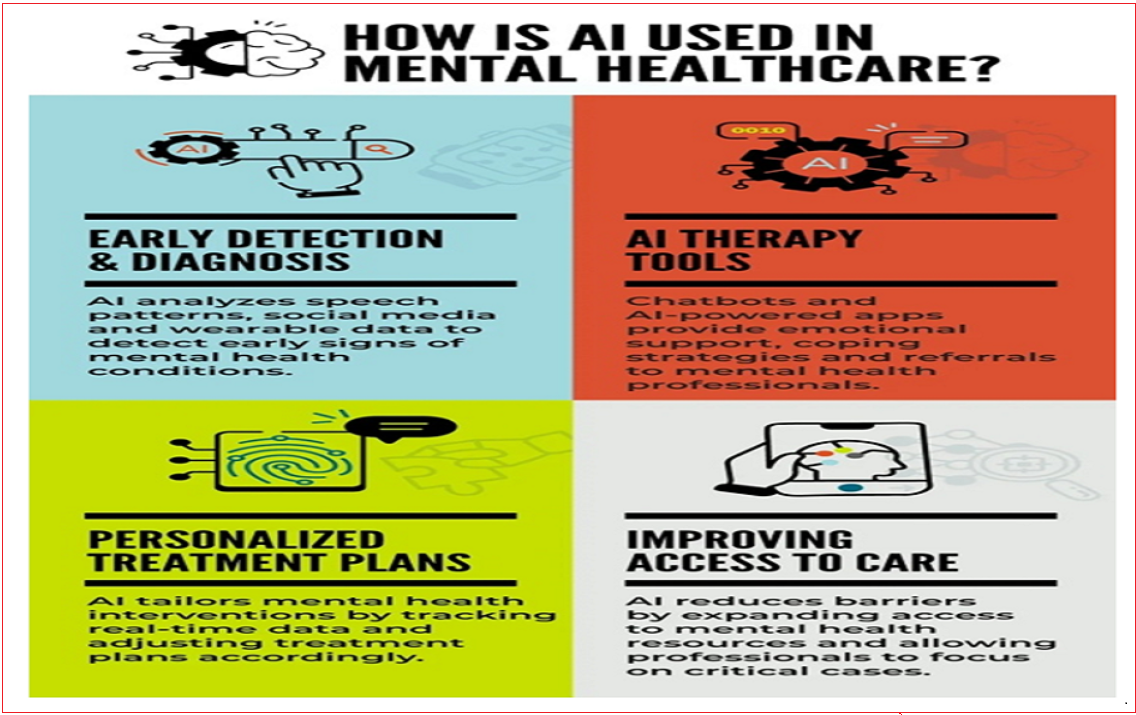
Key Technological Trends Impacting Psychology Today
- Online therapy platforms have changed access to mental health care, allowing psychologists to reach clients across borders. This shift has reshaped therapeutic relationships, consideration methods, and ethical guidelines for remote practice.
- Different AI-powered chatbots, mood trackers, and predictive tools are being used for early detection, triage, and support. Psychologists are now engaging with questions around accurateness, bias, ethical use, and the psychological impact of AI-mediated care.
- From CBT-based apps to mindfulness and sleep tools, digital interventions are more and more supplementing traditional therapy. Evaluating their long-term effectiveness and evidence base has become a key area of psychological research.
- Wearables, smartphones, and online platforms generate vast behavioural data. Psychologists are using this data to study patterns in mood, cognition, and behavior, while also addressing concerns around permission, privacy, and understanding.
- VR and AR are being applied in exposure therapy, trauma treatment, rehabilitation, and skills training. These technologies offer immersive, controlled environments that develop therapeutic possibilities beyond the clinic.
- As technology becomes entrenched in mental health care, psychologists are playing a vital role in shaping ethical frameworks addressing data security, algorithmic bias, transparency, and reasonable access.
- Digital platforms have expanded the scale and reach of psychological research, enabling cross-cultural studies, remote data collection, and quicker distribution of findings but also demanding stronger ethical and practical standards.
- Issues such as screen fatigue, social media anxiety, digital addiction, and online identity are now innermost topics in psychological study, reflecting how deeply technology shapes modern mental health.
What Traditional Clinical Psychology Still Does Best?
The foundations of clinical psychology still remain necessary. Human connection, ethical judgment, diagnostic accuracy, long-term therapeutic engagement, and evidence-based treatment models cannot be replaced by software alone.
Severe mental infirmity, trauma-informed care, crisis intervention, and complex behavioural disorders need highly trained professionals along with deep psychological expertise. Yet traditional training models were developed for in-person environments, not digital ones. And that gap is becoming increasingly noticeable.
The Budding Skills Gap in Contemporary Psychology
As psychology enters digital spaces, a lot of professionals find themselves facing unfamiliar province:
- Building therapeutic alliance through screens
- Interpreting digital behaviour and passive data
- Evaluating the clinical validity of mental health technologies
- Addressing ethical concerns around AI, bias, and privacy
- Measuring long-term outcomes of digital interventions
The science of psychology remains strong but the delivery context has essentially shifted. This shift demands more than revision. It demands research.
Why Advanced Psychological Research Is Now Crucial?
Digital mental health introduces complex, unanswered questions:
- Are digital interventions as efficient as traditional therapy over time?
- How does virtual therapy reshape emotional connection and trust?
- Can AI fairly and accurately assess psychological states?
- What safeguards are needed for data protection and permission?
- How should worldwide standards regulate digital mental health tools?
These are not questions of technique; they are questions of evidence, ethics, and impact. Addressing them requires planned academic inquiry and long-term research engagement.This is why a lot of experienced professionals globally are turning toward advanced pathways such as a PhD in Psychology not to step away from practice, but to reinforce and future-proof it.
The Shifting Identity of the Psychologist
The psychologist of the future will not operate in segregation. They will be:
- Clinicians who understand digital systems
- Researchers evaluating technology-mediated outcomes
- Advisors shaping global mental health platforms
- Contributors to policy and ethical frameworks
- Educators training digitally fluent practitioners
Advanced Doctorate research equips professionals to operate at this connection, where psychology, technology, and human behaviour meet.
Moving Forward: Building the Future of Mental Health
The future of psychology is not about replacing tradition, it is about expanding it responsibly.Advanced research pathways allow professionals to move beyond individual practice and contribute to:
- Evidence-based digital mental health models
- International policy and standards
- Ethical frameworks for emerging technologies
- Scalable, inclusive mental health solutions
In this global transformation, the most impactful psychologists will not simply follow change, they will help define it. And for those ready to shape the next era of mental health care, the journey often begins with deeper inquiry, rigorous research, and advanced scholarship through a PhD in Psychology, not as a credential alone, but as a commitment to advancing the field worldwide.