
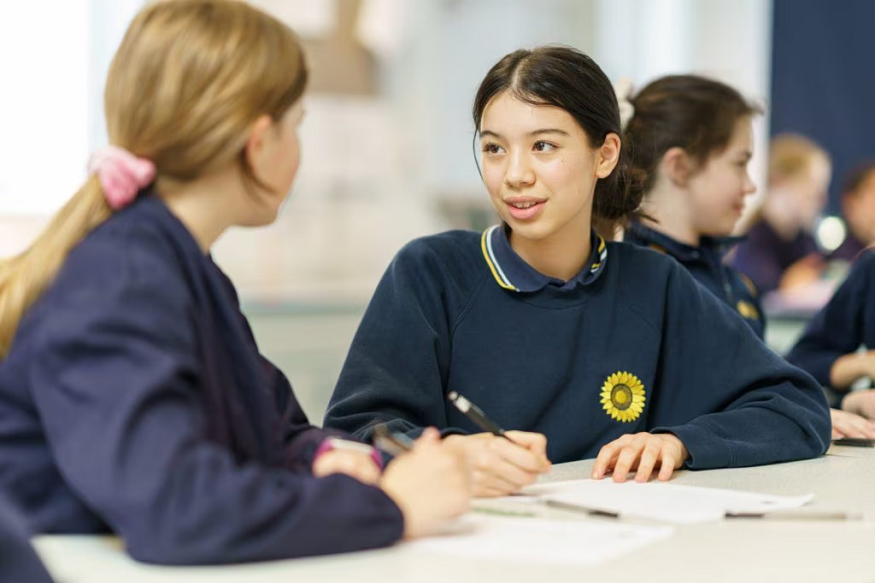
Every parent knows the moment. Your daughter comes home from school and, instead of the usual shrug, she talks. She tells you about a debate she won, a science experiment that went wrong in the best way, or a friend she stood up for at lunch. That is what thriving looks like, and it is quieter and more ordinary than the glossy prospectuses suggest.
Choosing an independent girls’ school is often framed as a decision about results and reputation. Those things matter, of course. But the girls who genuinely flourish tend to do so because of something less measurable: they feel known. They are seen as individuals rather than as names on a register, and that sense of belonging shapes how they learn, how they take risks, and how they carry themselves long after they leave.
What thriving actually means
It helps to be clear about what you are looking for. Academic progress is one part of it, but a daughter who thrives is also curious, resilient and comfortable in her own skin. She asks questions without fear of getting them wrong. She tries the sport she has never played, or the instrument she cannot yet read music for, because the environment makes ambition feel normal rather than exceptional.
An all-girls setting can support this in a particular way. When every leadership role, every top set and every stage part is filled by a girl, ambition is simply expected. Research has long pointed to the confidence girls can develop in this context, especially in subjects where they are sometimes under-represented later on, such as maths, physics and computing. It is not about shielding girls from the wider world. It is about giving them a few years to build the self-belief they will draw on within it.
The part parents play
Thriving is not something a school delivers to a passive family. It is a partnership, and the most helpful thing a parent can do is stay curious rather than anxious. Ask about the day, not just the marks. Celebrate effort and recovery from setbacks as much as the wins. Girls are quick to sense when a parent’s attention lands only on achievement, and that pressure can quietly undo the very confidence a good school is trying to build.
Practical habits matter too. Protect sleep. Keep some evenings unstructured. Talk to teachers early when something feels off, because small worries are far easier to settle than large ones. Schools that value pastoral care welcome these conversations, and the best relationships are built long before anything goes wrong.
Choosing the right fit
No two families want the same thing, and no two girls do either. When you visit a school, watch the pupils more than the buildings. Do they look at ease? Do they speak to visitors with genuine warmth? A calm, purposeful atmosphere usually tells you more than any league table.
Parents exploring a [nurturing independent girls’ school in Harpenden|https://sthildasharpenden.co.uk] often find that the right setting is one where high standards and genuine kindness sit comfortably together. St Hilda’s School in Harpenden is one example of a community built around that balance, where academic ambition is matched by an emphasis on character and wellbeing. You can read more at https://sthildasharpenden.co.uk.
In the end, thriving is less about a single perfect choice and more about the daily experience of a girl who feels supported to become herself. Get that right, and the results tend to follow.
Read More: Ordinary class or specialized class, how to choose?
*This article was contributed by the team at St Hilda’s School, an independent day school for girls in Harpenden, Hertfordshire. St Hilda’s is committed to combining strong academic standards with attentive pastoral care, helping each pupil grow in confidence and curiosity throughout her school years.*