Ask most parents what they want for their child and academic success usually comes up quickly. Reading early, counting confidently, settling well into school. All of it matters. Yet there is another kind of learning that often works quietly in the background, shaping how a child gets on with others for years to come: social skills.
The tricky part is knowing what strong social development actually looks like. It is easy to confuse a few behaviours that seem similar on the surface but point in very different directions. Understanding those differences helps parents spot what to encourage and what might need a gentle hand.
Confidence is not the same as loudness
A child who talks a lot, dominates games and never seems shy is often labelled “confident”. Sometimes that is true. Just as often, it masks a child who struggles to read the room or share the spotlight.
Read More: Learning Challenges Do Not Define a Child’s Potential
Genuine confidence shows up differently. It is the child who can join a group without taking it over, who copes when a game does not go their way, and who can sit with a quieter friend rather than always seeking the biggest audience. Loudness fills a space. Confidence makes room for others in it.
Making friends versus keeping them
Plenty of young children can make a friend in minutes. The playground is full of instant alliances formed over a shared interest in dinosaurs or a particular swing. That is a lovely start, but it is only half the story.
Keeping friends is the harder, more revealing skill. It asks a child to compromise, to apologise, to wait their turn and to forgive a small falling-out. These are the moments where real social learning happens. A child who makes ten friends a week but keeps none may need support with the slower work of staying connected, rather than the quick spark of connection itself.
Compliance versus cooperation
This distinction catches many adults out. A child who does as they are told is often seen as socially capable, when in fact they may simply be compliant. Compliance is following instructions to avoid trouble. Cooperation is choosing to work with others because they understand it helps everyone.
Read More: School Trips Are Not a Treat — They Are Part of the Education
The difference matters enormously as children grow. Cooperation involves listening to a friend’s idea, adjusting a plan together and feeling genuine satisfaction in a shared result. It cannot be forced, only nurtured, usually through plenty of unstructured play where children negotiate the rules themselves.
Where these skills take root
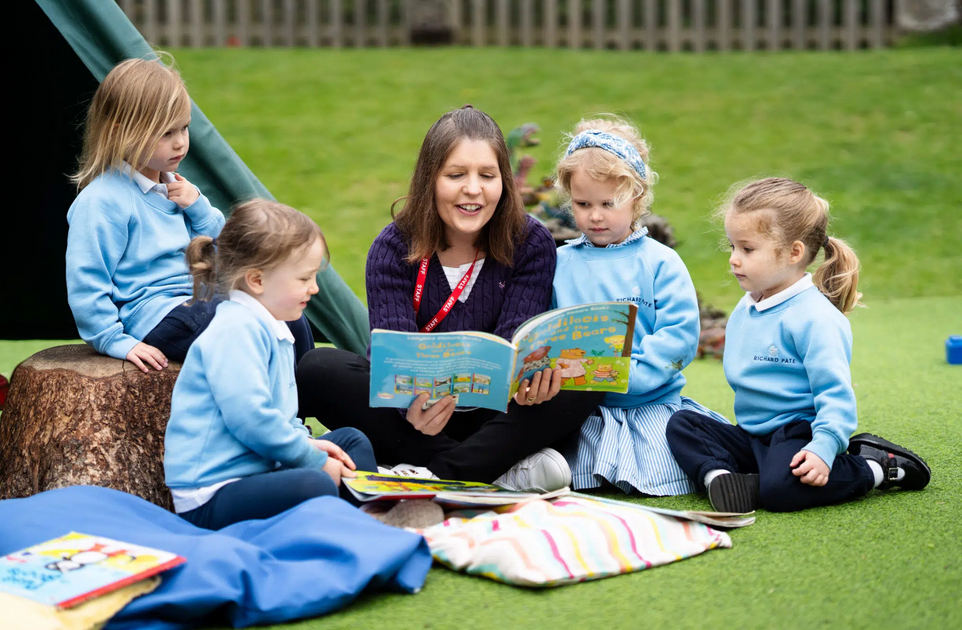
Social skills are rarely taught through a single lesson. They grow in the ordinary rhythm of daily life: at mealtimes, during tidying up, in the small disagreements that children learn to resolve on their own. Settings that give children time to play freely, alongside adults who model calm and kindness, tend to see these abilities flourish naturally.
This is something schools think about carefully. Parents looking for an environment that values a nurturing approach to early social and emotional development will often find it woven through everyday routines rather than confined to a timetable slot. Richard Pate School places real value on this quiet, steady growth, understanding that a child who feels secure among others is better placed to learn everything else.
How to help at home
Parents do not need a programme to support social development. A few simple habits go a long way.
- – Give children space to resolve small squabbles before stepping in.
- – Name feelings out loud, both theirs and yours, so emotions become familiar rather than frightening.
- – Praise cooperation when you see it, not just good behaviour.
- – Allow plenty of open-ended play with other children, where the rules are theirs to invent.
The aim is not to engineer a perfectly sociable child, but to give them the time and trust to practise.
Strong social skills rarely announce themselves. They show up in the child who shares without being asked, who notices when a friend is upset, who recovers from disappointment without falling apart. These quiet qualities shape not only childhood friendships but the adults children eventually become. For more on how a thoughtful early years environment supports this, visit https://richardpate.co.uk.
—
*This article was contributed by the team at Richard Pate School, an independent preparatory school in Cheltenham educating children from the early years through to age eleven. Richard Pate School is known for its warm, family atmosphere and its commitment to developing confident, well-rounded children, both academically and socially.*